
✕
Share Your Feedback
We’d love to hear from you
Thank you! Your submission has been received!
Oops! Something went wrong while submitting the form.
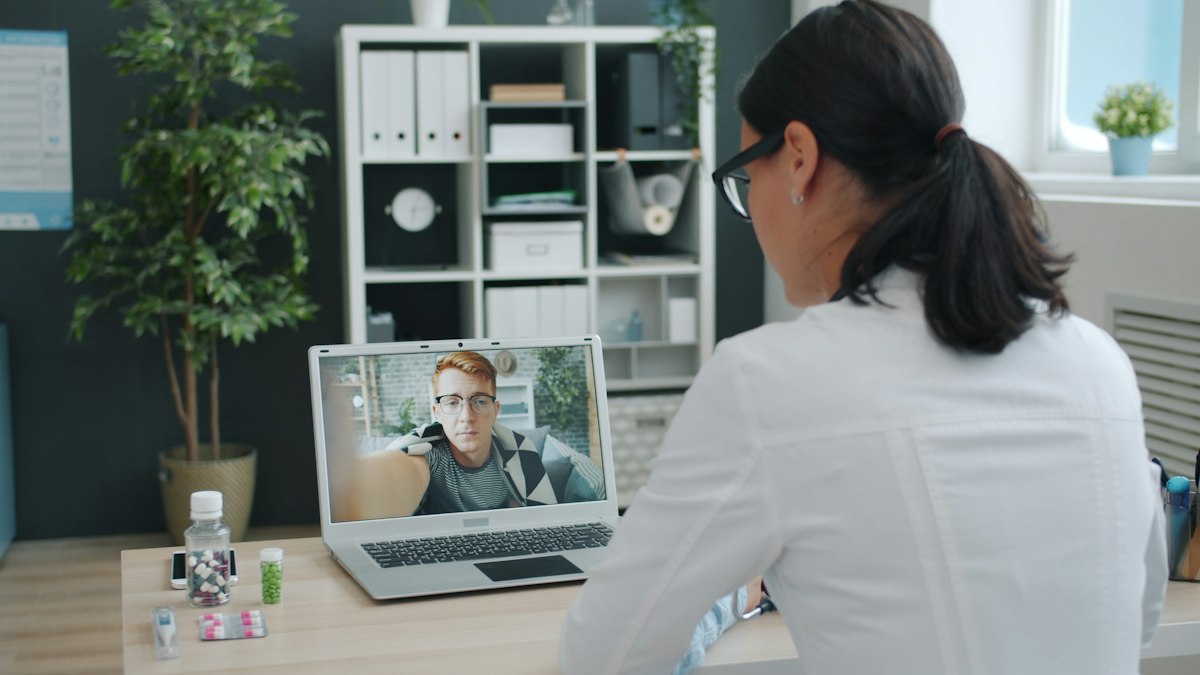
You have found a few names, booked nothing yet, and every profile ends in a different set of letters. LCSW. LMHC. PhD. PsyD. LMFT. For a parent trying to find a licensed therapist for telehealth in Manhattan, those letters are the first real clue about who will be on the other side of your teenager's screen, and almost nobody explains them in plain language.
This guide does. It covers what each New York credential means, which one suits which kind of problem, when you need someone who can prescribe, and how to confirm a license in a few minutes before the first session.
In an office, you see a waiting room, a front desk and certificates on the wall. On a video call you see a face and a name. That makes the credential your main evidence that the person is trained, supervised and accountable to a state licensing board.
It also matters for a legal reason. A therapist generally has to hold a license in the state where the client is physically located during the session. If your teen is in an apartment on the Upper West Side, the clinician needs a New York license, wherever they happen to be sitting. A licensed therapist on telehealth in Manhattan should be able to tell you their license type and state in one sentence.
Quick Info: In New York, licenses for psychologists, social workers, mental health counselors and family therapists are issued by the State Education Department, Office of the Professions.
An LCSW holds a master's degree in social work, has completed several years of supervised clinical experience after graduating, and has passed a clinical licensing exam. LCSWs can assess, diagnose and provide psychotherapy independently. Many child and adolescent therapists in New York clinics hold this license, partly because social work training puts a strong emphasis on family systems, schools and community resources, which is exactly where a teenager's life happens.
An LMSW has the same master's degree but is earlier in their career. In New York, an LMSW can provide clinical therapy under the supervision of a qualified licensed professional. In a well-run clinic this is normal and safe, and it often means your teen's care is reviewed by a senior clinician as well.
An LMHC holds a master's degree in mental health counseling, has completed thousands of hours of supervised practice and has passed a licensing exam. LMHCs provide individual and group therapy and are well suited to common teen concerns such as anxiety, low mood, stress and self-esteem.
An LMFT is trained to treat problems within the context of the whole family. If conflict at home, a divorce or a sibling situation sits at the center of what your teenager is going through, a family therapist's lens can help.
A licensed psychologist holds a doctoral degree, has completed a supervised internship and postdoctoral experience, and has passed a national exam. Psychologists provide therapy and are the professionals most often trained to carry out formal psychological testing, for example a full evaluation for a learning difference.
These are medical prescribers. A psychiatrist is a physician, and a psychiatric nurse practitioner is an advanced practice nurse. They evaluate whether medication could help and then monitor it. Most do shorter medication visits and work alongside a therapist rather than replacing one.
Key Takeaway: For most teen concerns, the right license matters less than the right experience. An LCSW who works with adolescents every day is often a better fit than a generalist with a longer title.
Parents often assume a doctorate means better care. For weekly therapy with a 14 year old, that is not how it works. Research on therapy outcomes consistently points to the relationship between the young person and the clinician, and to the use of a structured, evidence-based method, as stronger predictors of progress than the type of degree.
A practical way to match credential to need:
You do not need to take anyone's word for it. Before the first session, do three quick checks:
If the provider is a clinic rather than a solo practice, ask also how the clinic itself is licensed. A clinic certified under Article 31 by the New York State Office of Mental Health has its own oversight, quality standards and supervision requirements on top of each clinician's individual license.
Good to Know: Writing down each clinician's name and license number when you call around makes comparing options far easier after the third conversation.
A license tells you someone is qualified. It does not tell you whether they suit your child. On a short call, ask:
When you compare a licensed therapist telehealth Manhattan option against a national platform, these answers usually reveal the difference faster than any profile page. Listen for clear, specific answers. "We'd likely start with CBT, meet weekly, and check in with you every few sessions" is a good answer. "We'll see how it goes" is not.
Manhattan has plenty of providers, but a cross-town trip at 4 pm can easily take 40 minutes each way. Over a school term that is a lot of lost afternoons, and it is usually the travel, not the therapy, that makes families quit. A licensed therapist on telehealth in Manhattan removes that problem and keeps weekly sessions realistic around school, homework, sports and work.
National data shows why consistency matters. According to the CDC, 4 in 10 high school students report persistent feelings of sadness or hopelessness. Teens in that group need steady care, not appointments that fall apart in the second month because of commutes.
Telehealth also helps with the practical details that credentials do not cover:
Mount Behavioral Health is a licensed Article 31 clinic certified by the New York State Office of Mental Health. We provide telehealth therapy and psychiatry for children, teens and young adults across Manhattan and all five boroughs, with a focus on ages 9 to 21. Our only physical clinic is in Brooklyn, where in-person sessions are available for families who want them.
What families can expect:
Our Manhattan telehealth services page explains how care works for families in the borough, and our guide on what to check before choosing a telehealth therapist in Manhattan covers insurance, crisis planning and wait times in more detail.
Quick Info: If your child is in immediate danger, call 911. For urgent emotional support, call or text 988 to reach the 988 Suicide and Crisis Lifeline.
Yes. In New York, a Licensed Clinical Social Worker is fully licensed to assess, diagnose and provide psychotherapy independently. Many experienced child and adolescent therapists hold this license.
Not automatically. Psychologists are trained in formal testing, which is useful for some questions. For weekly therapy, the clinician's experience with teens and use of an evidence-based approach usually matter more than the degree.
Generally no. A therapist usually needs a New York license to treat a client who is physically in New York during the session. Always ask which state the license is in.
No. Therapists, including psychologists in New York, do not prescribe. If medication may help, a psychiatrist or psychiatric nurse practitioner provides the evaluation and works alongside the therapist.
Ask for the clinician's name and license number, then search the New York State Office of the Professions online. It shows the license type and whether the registration is current.
Many New York plans, including Medicaid, cover telehealth mental health care. Coverage depends on your plan, so ask the provider to verify benefits before the first session.
Ready to talk it through? Request an appointment or call 718-400-0545 to speak with our intake team about licensed telehealth care for your child in Manhattan.


