
✕
Share Your Feedback
We’d love to hear from you
Thank you! Your submission has been received!
Oops! Something went wrong while submitting the form.
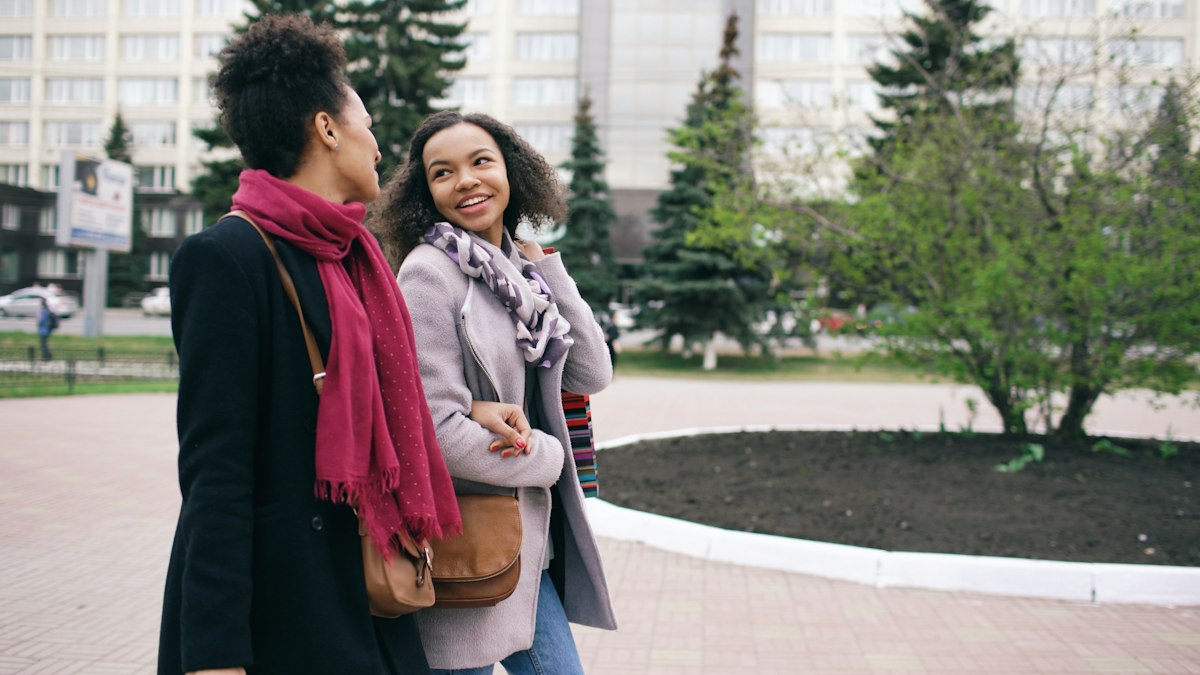
A great deal of youth mental health support has moved online, and for good reasons. But in-person peer support has held its ground, and at Mount Behavioral Health it remains how we deliver peer services wherever it's practical. That isn't nostalgia. Sitting beside a young person does things that a video call, however convenient, struggles to replicate.
Activity instead of eye contact. Much of the most useful conversation happens sideways: walking, playing basketball, standing in a line. For teenagers who find direct conversation confronting, doing something together removes the pressure that makes them shut down.
The unplanned parts. The comment on the walk back, the thing said while waiting for the bus. These moments don't exist in a scheduled 30-minute call that ends when someone clicks leave.
Physical presence during hard things. An advocate can sit next to a young person in a school meeting. That physical presence, someone visibly on their side in a room of adults, changes how a teenager experiences the whole situation.
A read on the whole picture. Meeting in the real world shows an advocate things a screen doesn't: how a young person carries themselves, who they greet, whether they seem comfortable in their own neighborhood.
Rarely in a clinical office, which is part of the point. Depending on what suits the young person and what's been agreed, meetings might happen in a community space, a park, a cafe, at school around an appointment, or at home with the family present. The setting is chosen for the young person rather than the service.
This flexibility matters because the young people who most need peer support are often those least willing to attend a formal appointment in a formal building. Meeting them somewhere ordinary lowers the barrier considerably.
There is a practical benefit as well. A young person who has come to associate every appointment with a waiting room and a clipboard often responds differently to a conversation that happens somewhere they would go anyway, and that difference in association tends to show up in how much they say.
A young person who has retreated from school and friendships will usually also retreat from a video call. It's easy to cancel, easy to answer in monosyllables, easy to switch off. An advocate who turns up, reliably, week after week, is harder to fade out on, and that persistence is often what re-establishes contact.
There's a broader point here too: isolation is rarely solved by more screen time. If the difficulty is disconnection from the world, the remedy generally involves going out into it. Our piece on the power of social connection covers why this matters clinically.
Situation
Usual format
Building the relationship early on
In person
Attending a school or clinical meeting
In person
Exam week or illness
Short virtual check-in
Bad weather or travel
Virtual
Young person not leaving the house
Virtual, working towards in person
In-person peer support does require something. A young person has to agree to meet, be somewhere at a set time, and tolerate the early awkwardness of spending an hour with someone they don't yet know. For a teenager who is anxious or depleted, none of that is trivial, and the first few meetings can be genuinely hard work.
Advocates plan around this. First meetings are usually short, in a neutral place, with a clear end time and an activity to take the weight off the conversation. The aim is for the young person to leave thinking it was less uncomfortable than they expected, which is usually enough to get a second meeting.
Not every service described as peer support delivers it face to face. Worth asking: is peer support offered in person or only virtually? Where do meetings take place? Can the advocate attend school meetings? How are advocates trained and supervised? A provider that has thought about these will answer quickly and specifically.
If you are comparing providers, ask that question directly and listen for a specific answer. In-person peer support takes more organizing than a video link, and a service that has built it into how it works is telling you something about its priorities.
For most families the question isn't in-person versus virtual but how to get the balance right. A teenager who meets their advocate face to face most weeks, with a short video check-in during exam season or a bout of flu, gets the benefits of both. What tends not to work is a service that only ever appears on a screen, particularly for the young people whose central difficulty is that they have withdrawn from the world around them.
We provide Youth Peer Advocate and Family Peer Advocate services across all five boroughs, delivered in person wherever possible, with telehealth available when meeting up isn't practical. Our in-person work is anchored at our Brooklyn clinic and extends across the city. See our peer support page or contact us on 718-400-0545.
For building the relationship, generally yes. Most young people do best with in-person meetings supplemented by virtual contact when needed.
In community settings, parks, cafes, at school around appointments, or at home. Rarely in a clinical office, which is deliberate.
Often yes, with your consent. Having someone alongside them helps many young people participate in meetings about their own care.
Advocates are trained, supervised and subject to safeguarding procedures. Parents are informed about where meetings take place.
Typically 45 minutes to an hour, though it varies with the activity and the young person.
That's a common starting point. Contact often begins virtually or at home and moves outward as confidence builds.
Usually not for the young person's own sessions. Family Peer Advocates work with parents separately.
Commonly weekly or every two weeks, with flexibility around school and family commitments.
Peer advocates have lived experience of mental health challenges specifically, plus training in using it within a clinical service.
Yes. Our peer services cover Brooklyn, Manhattan, Queens, the Bronx and Staten Island.
If your child is in immediate danger or thinking about suicide, call or text 988 (Suicide & Crisis Lifeline) or call 911.


